Good Class Bungalows. Concentration, not dispersion.
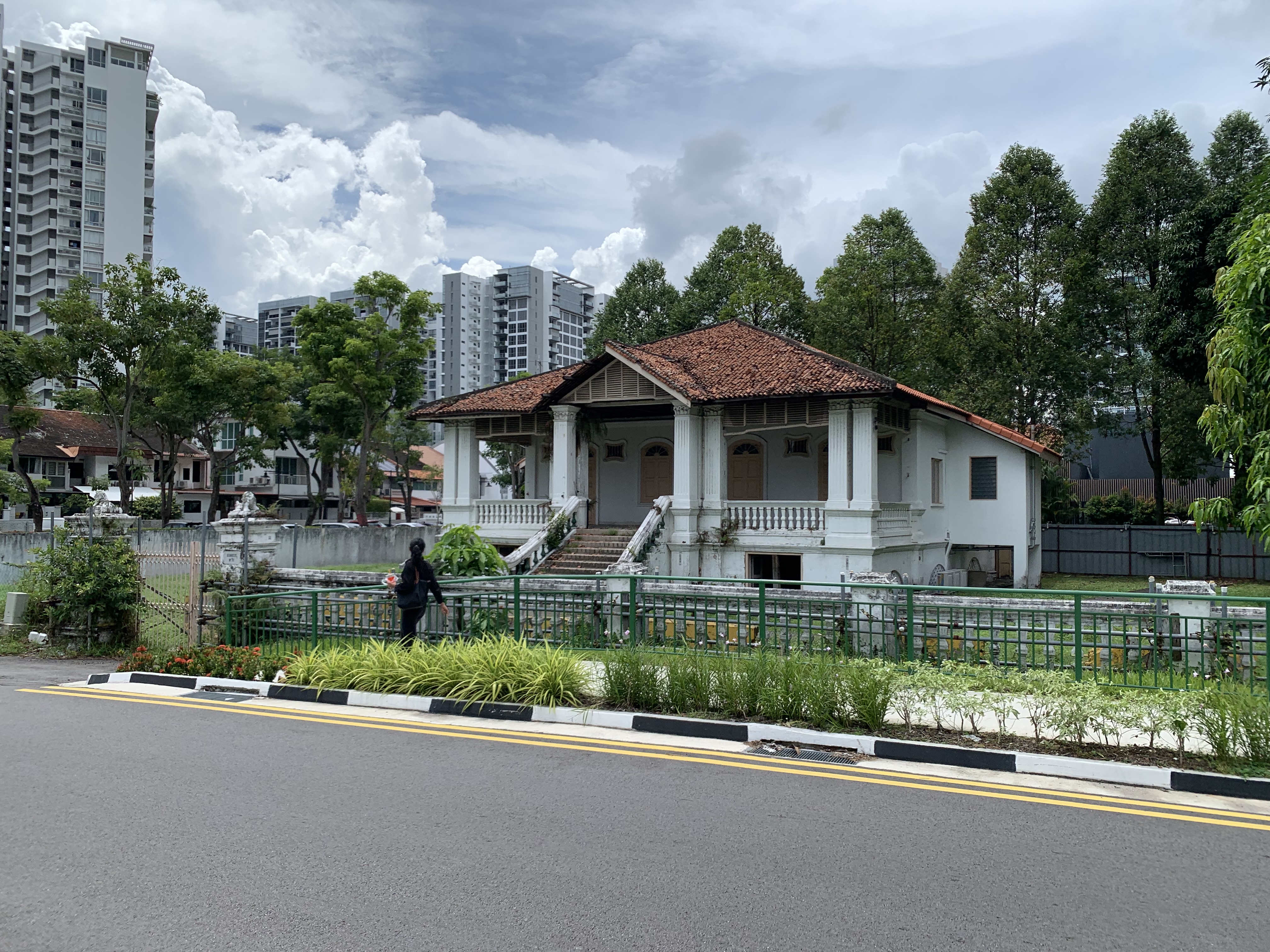
Singapore’s Good Class Bungalow market closed 2025 with twenty-eight transactions totalling approximately S$966 million in caveated value, roughly 48 percent above 2024’s S$652 million across twenty-three transactions. The headlines called this a recovery. The transaction structure suggests something more specific: the market is not broadening, it is concentrating.
Three deals in the second half of 2025 anchor the read. In the largest transaction of the year, a freehold GCB on Peirce Road of 80,448 square feet changed hands at S$148 million, or roughly S$1,840 per square foot. In Dalvey Estate, a 15,555-square-foot plot cleared at S$41.6 million, or S$2,674 per square foot. And on Second Avenue, a S$53 million acquisition at S$2,652 per square foot passed to Gallant Tang, the twenty-nine-year-old group chief executive of SingHaiyi.
Three observations follow.
The first concerns price per square foot, not absolute price. Prime-district plots in 2025 cleared between roughly S$2,600 and S$2,700 per square foot on smaller sites, while larger land plots traded at significantly lower psf figures (the Peirce Road transaction at S$1,840 psf being illustrative). The market is bifurcating between plot-as-land, priced against redevelopment yield, and plot-as-address, priced against scarcity. A buyer without clarity on which kind of plot they want will pay the wrong price for either.
The second concerns buyer composition. A significant proportion of 2025 GCB acquirers were under forty. The Gallant Tang transaction is the visible example; several less-public transitions followed a similar pattern. Intergenerational wealth is not merely inheriting; it is actively reallocating, from listed securities, from operating-business distributions, from family-office restructurings, into GCB land as a stable long-duration asset.
The third concerns how transactions happen. Increasingly, they do not reach the public market. Off-market introductions accounted for the majority of 2025 GCB activity we observed. For owners considering a divestment, the relevant mandate question is no longer “list it or not”; it is “to whom does the introduction first get made”.
Looking into 2026, the supply side appears to be softening further. More owners are expected to move, particularly in the generational bracket for whom the size of the asset has outgrown its utility. Pricing expectations on the sell side are recalibrating toward what buyers will actually pay. That combination, absent a macro shock, points to continued concentration rather than broader opening.
The GCB market remains one of the most consequential in Singapore private real estate. It is also one of the smallest, at roughly 2,800 plots, held by a finite set of families. Movement in this market is always particular and rarely visible.
Zaiwealth advises selectively on GCB acquisitions and divestments. Most conversations are handled privately.